Driveway Cracking and Heaving in Clay Soil? Why the Base Is the Real Problem
July 17, 2026
Quick Answer: When a driveway cracks and heaves over clay soil, the concrete itself is usually fine. The problem lives underneath. Expansive clay swells when it soaks up winter rain and shrinks as it dries out in summer, and that repeated up-and-down movement lifts and drops the slab until it cracks. A slab on grade is only as stable as the compacted subgrade and gravel base beneath it, so when the base was thin, poorly compacted, or laid without managing water, the driveway rides the soil's movement instead of resisting it. The fix is not a thicker slab on top of a weak base. It is a properly built support system underneath.
You pull into the driveway you have parked on for years and you notice it again. A crack that used to be a hairline now traps dirt and catches the edge of your shoe. One slab sits a little higher than the one next to it, so the panels no longer line up flat. After a wet winter the lifted corner is worse, and by late summer the whole thing has shifted again. It looks like the concrete failed. Almost always, the concrete is the last thing to blame.
Across the East Bay, driveways sit on some of the most reactive soil in California. When a driveway keeps cracking and heaving here, the story is playing out below the surface, in ground that swells and shrinks with the seasons and in a base that either controls that movement or gets overrun by it. Understanding what is actually happening under your slab is the difference between chasing the same cracks for years and fixing the cause once.
The Soil Under Your Driveway Moves With the Seasons
Clay is the defining soil across much of the East Bay, and it does something sand and gravel never do. It holds water, expands when wet, and shrinks and cracks when it dries. Foundation crews working Walnut Creek, Concord, and the surrounding Contra Costa hills describe this shrink-swell cycle as the leading cause of cracked slabs, sticking doors, and uneven floors in the area, and your driveway sits directly on top of it.
The wet-dry swing
The Bay Area's wet winters and dry summers create constant movement in clay soil. Rain causes the ground to expand, while summer heat dries and shrinks it. As the soil repeatedly swells and contracts, your driveway moves with it, creating stress that eventually leads to cracks, uneven surfaces, and settlement.
Differential movement is what actually breaks concrete
Concrete cracks because the soil beneath it moves unevenly. Areas near downspouts, irrigation leaks, or shade stay wetter and expand more than drier sections. This uneven support bends the slab, and concrete cannot resist bending well. Even without heavy loads, repeated movement eventually causes visible cracking and displacement.
Reactive clay is a known base problem, not a fluke
Reactive clay beneath a driveway is a common cause of cracking and settlement. If the base was poorly compacted or not designed for expansive soil, the slab simply follows the ground's movement. Proper base preparation and drainage help reduce soil movement and improve long-term driveway stability and performance.
Why the Base, Not the Slab, Decides Everything
Here is the part most homeowners never hear. A driveway is a slab on grade, and by definition a slab on grade is not designed to be self-supporting. It relies entirely on what concrete professionals call the soil support system beneath it. If that system is right, the slab stays flat for decades. If it is wrong, no amount of concrete on top saves it.
The layers that hold a driveway up
A driveway depends on more than concrete for strength. Beneath the slab are the native soil, compacted subgrade, gravel subbase, and base course. These layers provide stability and distribute loads evenly. When properly prepared, they help the concrete resist movement, cracking, and long-term settlement caused by changing soil conditions.
Uniform support beats strong support
A driveway lasts longer when the slab has consistent support beneath it. Uneven soil creates weak spots that force concrete to bend, leading to cracks and surface displacement. Even support across the entire slab is more important than simply having strong soil, because it prevents stress from concentrating in one area.
Compaction is what makes clay behave
Proper soil compaction is essential before installing a driveway over clay. Compaction increases soil strength, limits future settlement, and reduces the amount clay expands and shrinks with changing moisture. Re-compacting disturbed soil during construction creates a more stable foundation that helps prevent cracking and uneven driveway movement over time.
Tip: Watch the pattern across the seasons before you assume the worst. Note whether a lifted slab is highest after the wet winter and settles back in late summer. That seasonal rise and fall points squarely at clay movement and base support, not at bad concrete, and it is exactly the pattern a contractor wants to hear about to target the cause.
The Base Details That Separate a Lasting Driveway From a Failing One
When a driveway over clay holds flat for twenty years and the one next door cracks in five, the difference is almost always in choices made before the concrete truck ever showed up.
Base thickness and material
A stable driveway needs a compacted gravel base at least four inches thick, or thicker if site conditions require it. Gravel creates uniform support, improves drainage, and helps isolate the concrete from moisture changes in expansive clay. This protective layer reduces movement, settlement, and long-term cracking caused by unstable soil beneath.
Reinforcement holds cracks tight, it does not stop movement
Rebar and wire mesh help control cracks but cannot prevent soil movement beneath a driveway. Reinforcement keeps cracks narrow and improves slab integrity after cracking occurs. The real protection comes from a properly prepared base and stable soil, which support the slab evenly and reduce unnecessary movement from below.
Control joints put cracks where you want them
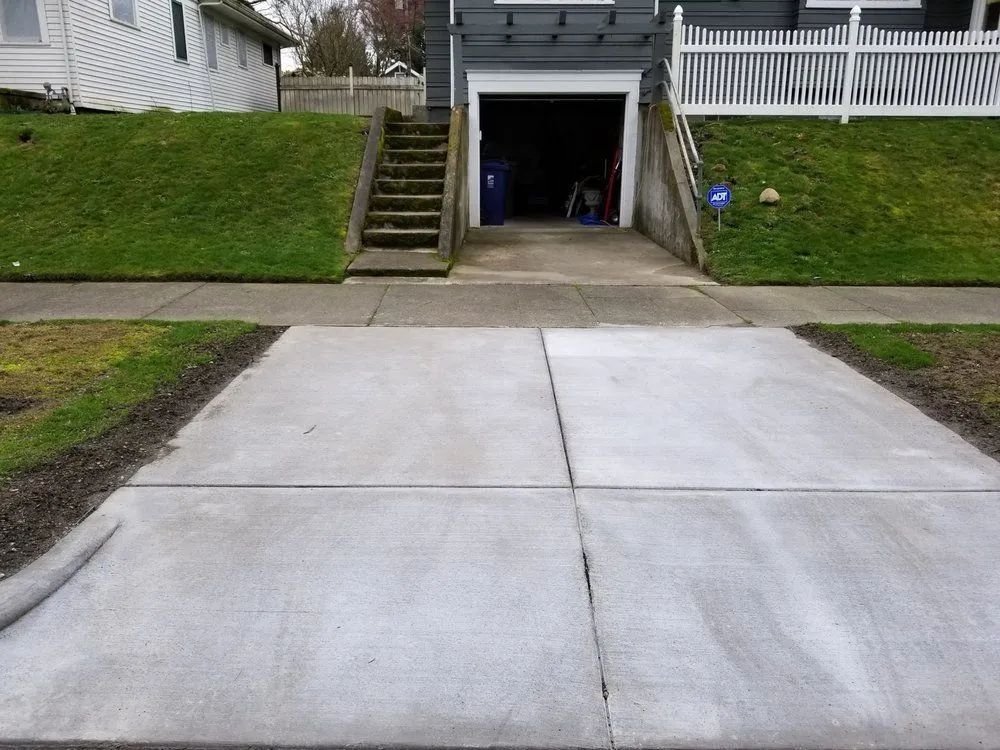
Control joints guide natural concrete shrinkage into planned locations instead of allowing random surface cracks. As concrete cures, it contracts and creates internal stress. Properly spaced joints relieve that stress, producing cleaner, controlled cracks that preserve the driveway's appearance while reducing the impact of normal curing movement over time.
Water management is half the job
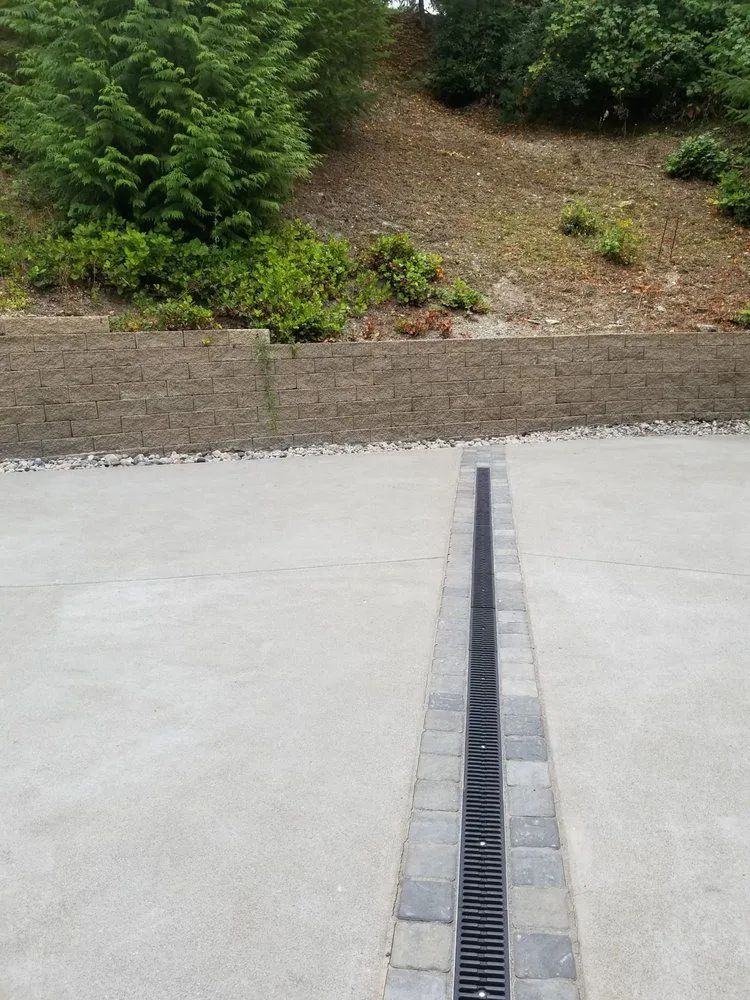
Managing water around a driveway helps keep expansive clay stable. Proper grading directs rainwater away from the slab, while downspouts discharge well beyond its edges. Reducing moisture fluctuations limits soil expansion and shrinkage, lowering the risk of heaving, settlement, cracking, and other damage caused by changing ground conditions beneath concrete.
Warning: Do not let anyone talk you into simply pouring a fresh slab over the same untouched base to make the cracking go away. If the original problem was reactive clay and a thin or poorly compacted base, new concrete on the old foundation will move and crack the same way, often within a season or two. On expansive soil the answer is fixing what is underneath, not laying a heavier top layer over an unsolved problem.
What Diagnosis Actually Looks Like
Because the cause lives under the slab, sorting it out takes looking below the surface, not just at the crack. An experienced contractor reads the crack pattern and the way the panels have shifted, checks whether the movement tracks the wet and dry seasons, and looks at where water is landing around the driveway, from downspouts to irrigation to the slope of the yard. Those clues point to whether the trouble is base support, drainage, or both.
From there the honest question is whether the existing base can be corrected or whether the driveway needs to be rebuilt from the ground up on a properly compacted subgrade and gravel base with drainage handled. On badly reactive clay that answer leans toward doing the base right rather than patching the top, because patches on a moving base just come back. What you end up with is a plan aimed at the real cause, which beats another few years of watching the same cracks widen.
Frequently Asked Questions
Why does my driveway crack more after a wet winter?
Clay beneath your driveway absorbs winter rain, swells, and lifts the slab before shrinking during dry summer months. That repeated expansion and contraction stresses the concrete, creating cracks. The problem usually starts in the soil and base, not the concrete itself.
Is a thicker slab the answer to heaving over clay?
Not usually. A thicker slab still depends on a properly compacted subgrade and gravel base for support. If drainage is poor or the base is unstable, concrete continues moving with expansive clay, regardless of additional slab thickness over time.
Does rebar stop a driveway from cracking?
No. Rebar helps keep cracks tightly closed after they form, but it cannot prevent soil movement beneath the slab. A stable, compacted base and proper drainage provide the real protection against cracking caused by shifting expansive clay beneath driveways.
How thick should the base under a driveway be?
A driveway should generally rest on at least four inches of well-compacted granular base material, with greater thickness when site conditions require. Clean, free-draining gravel provides uniform support, improves stability, and helps prevent moisture-related movement beneath the concrete slab.
Can better drainage really reduce cracking?
Yes. Proper drainage limits moisture changes in expansive clay by directing rainwater and downspout runoff away from the driveway. Keeping soil moisture more consistent reduces seasonal swelling and shrinking, helping minimize slab movement and preventing many common driveway cracks over time.
Why do control joints matter if they do not stop movement?
Concrete naturally shrinks while curing, making cracks unavoidable. Control joints create planned weak points where shrinkage cracks can form neatly instead of randomly across the surface. They manage concrete movement but cannot prevent soil-related shifting beneath the driveway slab.
Getting Ahead of the Cracks for Good
A driveway that keeps cracking and heaving over clay is not telling you the concrete failed. It is telling you the ground underneath is moving and the base was never built to hold the slab steady through the wet and dry seasons. The slab is only the surface you see. The stability lives in a compacted subgrade, a clean gravel base, and water carried away from the edge, and when those are right the concrete stays flat for decades instead of shifting every year. Chasing the crack on top will never fix a problem that lives below it.
Book a
driveway assessment — If your driveway keeps cracking and lifting through
Concord, California, and the surrounding region's wet winters and dry summers, the answer is under the slab, not on it, and every season you wait the movement widens the same cracks. With 20 years of experience, Aloha Concrete and Design reads the crack pattern, checks the grade and drainage, and evaluates whether the base can be corrected or the driveway should be rebuilt on a properly compacted subgrade and gravel base so it holds flat through the seasons. Schedule your driveway evaluation today and let our experienced team help you stop patching the surface and fix what is moving underneath.