Patio Pooling Water and Staying Wet? Why Slope and Drainage Were Missed
September 18, 2026
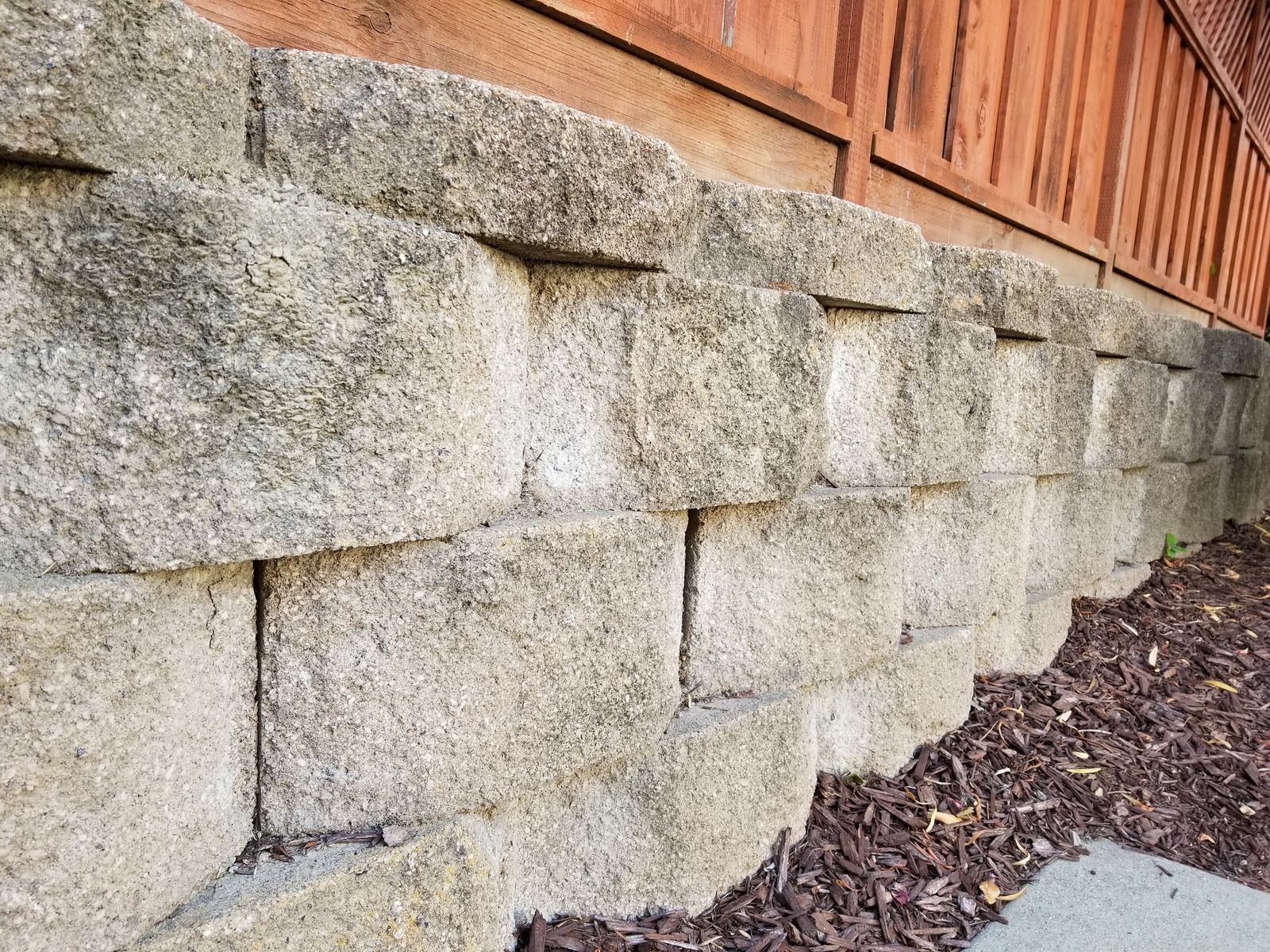
Homeowners tend to focus on what a retaining wall looks like, the block color, the stone pattern, the cap detail. All of that matters for the finished yard, but none of it holds back a hillside. The engineering underneath does.
A wall built on a shallow footing, with backfill that's just native clay pushed back into place and no drainage layer behind it, is set up to fail the same way the slope was already failing, just with a wall in front of it now. A wall built with a footing that reaches stable ground, backfill designed to drain, and a structure sized and reinforced for the actual height and load of that specific slope is a different thing entirely. It's not decoration. It's the piece of engineering standing between your yard and the hillside it sits on.
Quick Answer: A patio that holds water in puddles or stays damp for days after a storm almost always comes down to slope, not bad luck. Concrete needs a consistent pitch away from the house, roughly a quarter inch of drop for every foot of slab, to shed water instead of collecting it. When that grade is missing, too shallow, or interrupted by a low spot, water sits on the surface, soaks into hairline cracks, and slowly breaks the slab down from the inside. In the East Bay's wet winters, standing water on a poorly graded patio doesn't just stain and grow algae. It works its way into the base beneath the concrete, and once that base erodes, the slab settles further and the puddle gets worse every season. Fixing the surface without correcting the slope underneath it usually just moves the low spot somewhere else.
You go out after the first real storm of the season and there it is again: a shallow puddle sitting right in the middle of the patio, or a strip along the back edge that stays damp for two or three days after everyone else's yard has dried out. Maybe it's been there since the patio was poured. Maybe it showed up a few years in, after a summer of watching that same spot get a little lower each year. Either way, you've probably already tried the obvious fixes. A push broom to sweep it toward the lawn. A shop vac after a big rain. Moving the patio furniture off the wet section so the legs stop rusting into the concrete.
None of that touches the actual problem. A patio holds water because somewhere between the ground it sits on and the finished surface, the concrete stopped sloping the way it's supposed to, and no amount of sweeping changes the shape of the slab underneath your feet.
Why Water Is Sitting on Your Patio Instead of Running Off
Concrete is not naturally flat and level the way it looks. A patio that drains correctly is actually pitched, just subtly enough that you'd never notice standing on it. That pitch is what does the work.
A Quarter Inch Per Foot Is The Benchmark That Keeps Water Moving
A standard patio slope is roughly two percent, or about a quarter inch of drop per foot away from the house. Across ten feet, that creates a two-and-a-half-inch difference, providing enough pitch for rainwater to flow steadily away from the slab.
Wetter Climates Need A Little More Pitch Than Dry Ones
Patios in wetter climates may benefit from slightly more pitch because heavy storms deliver large amounts of water quickly. In the East Bay, winter rainfall can overwhelm a minimal slope, allowing water to linger longer and increasing the chance of persistent puddling.
A Patio Only Needs To Be Flat, Not Sloped, To Fail This Test
A patio can look level, smooth, and professionally finished while still having poor drainage. When the surface is completely flat, gravity has no consistent path to move water away, allowing puddles to collect wherever minor surface imperfections create depressions.
How a Patio Ends Up Without Enough Slope in the First Place
Slope isn't something concrete develops on its own. It has to be built in deliberately, before a single yard of concrete gets poured, and there are a few common ways that step gets missed or undone.
The Forms Were Set Level Instead Of Pitched
A slab's slope is established by the forms before concrete is poured. If those forms are set flat because of a measuring mistake or an incorrectly aligned doorway, the finished patio may lack drainage. Once cured, the concrete cannot simply be reshaped to correct it.
The Subgrade Wasn't Compacted Evenly
Proper slope depends on stable ground beneath the slab. If the subgrade is compacted unevenly, sections can settle at different rates after installation. A patio may initially have the correct pitch but later develop low areas as weaker sections of the base compress beneath the concrete.
Screeding Created A Low Spot, Sometimes Called A Birdbath
Screeding shapes and levels wet concrete using a straight edge. If one section is worked slightly deeper, especially around obstacles, it can leave a shallow depression. These birdbaths may be only half an inch deep, but that's enough to hold standing water.
Tip: Run a hose test the next time it's dry out. Let water flow slowly across the patio from the high side, near the house, and watch where it collects instead of moving. A patio with correct slope clears water steadily toward one edge within a minute or two. A patio with a birdbath or a flat zone will show water gathering and stalling in the same spot every time, which tells you exactly where the problem sits before you call anyone out to look at it.
What Standing Water Actually Does to the Slab
A puddle that dries up in a day looks harmless. What it's doing to the concrete underneath isn't harmless at all, and the damage compounds every time it happens again.
Moisture Works Into The Concrete Itself
Concrete contains microscopic pores and can develop hairline cracks from curing shrinkage or minor settling. When water remains on the surface, moisture can enter these openings. Repeated wetting and drying can contribute to deterioration around cracks, gradually weakening affected areas over time.
The Base Underneath The Slab Is Often The Real Casualty
Water collecting in a low spot can move through cracks and joints into the compacted base below. Repeated water movement may wash away fine material and create voids. As support disappears, the slab can settle farther, making the original drainage problem progressively worse.
Shaded, Damp Spots Grow Algae And Moss, And That Surface Gets Slick
Patio areas that remain damp for extended periods, particularly in shaded locations, create favorable conditions for algae and moss. Besides affecting appearance, this growth can reduce traction and make concrete slippery, especially after rainfall when the surface is already wet.
Additions and Changes That Wreck Drainage After the Fact
Sometimes a patio drained fine for years and only started holding water after something nearby changed. The slope didn't fail. Something around it shifted the water's path.
A Patio Cover Or Enclosure Changes Where Rain Lands
Adding a roof, pergola with solid panels, or full patio enclosure after the concrete was poured means rainwater that used to spread evenly across the slab, or miss it entirely, now concentrates at the roofline's edge. If the original grade wasn't built to handle that new concentrated flow, water starts pooling right where the roof drips.
A Downspout Got Rerouted Onto Or Near The Patio
Gutter work, a re-roof, or a landscaping change can end with a downspout discharging closer to the patio than it used to, sometimes right onto the high side of the slab. That's a lot more water hitting one section than the original slope was ever designed to move.
Planters, Raised Beds, Or New Hardscape Changed The Grade Around The Edges
A patio's drainage depends on having somewhere for water to go once it reaches the low edge. Raised planter boxes, a new retaining wall, or fresh landscaping installed right at the patio's perimeter can unintentionally dam that edge, turning a slab that used to shed water cleanly into one that backs up against its own border.
Warning: Don't treat a patio that suddenly started holding water as a mystery to live with. If the ponding is new, something specific changed nearby, a downspout, a grading job, an addition. Trace it back instead of assuming the concrete itself just failed. And don't let standing water sit through repeated wet seasons because it seems cosmetic. Every cycle of water working into the base below the slab makes the eventual repair bigger than it would have been the first year you noticed it.
Fixing a Patio That Won't Drain
Once slope is the confirmed problem, the fix depends on how much of the patio is affected and how deep the low spot goes.
A Shallow, Isolated Low Spot Can Sometimes Be Corrected With A Sloped Overlay
A shallow, isolated low spot may sometimes be corrected with a sloped overlay. For birdbaths an inch or less, a bonded concrete overlay or polymer-modified topping can rebuild the missing pitch without removing the entire slab. This works best when surrounding concrete remains structurally sound.
A Patio With Poor Slope Across Most Or All Of Its Surface Generally Needs To Come Out And Be Repoured
When poor grading affects most or all of a patio, replacement is usually the lasting solution. If the original forms were incorrectly pitched or the subgrade settled broadly, surface patching may only postpone ponding. Removing and repouring over a properly compacted base addresses the underlying problem.
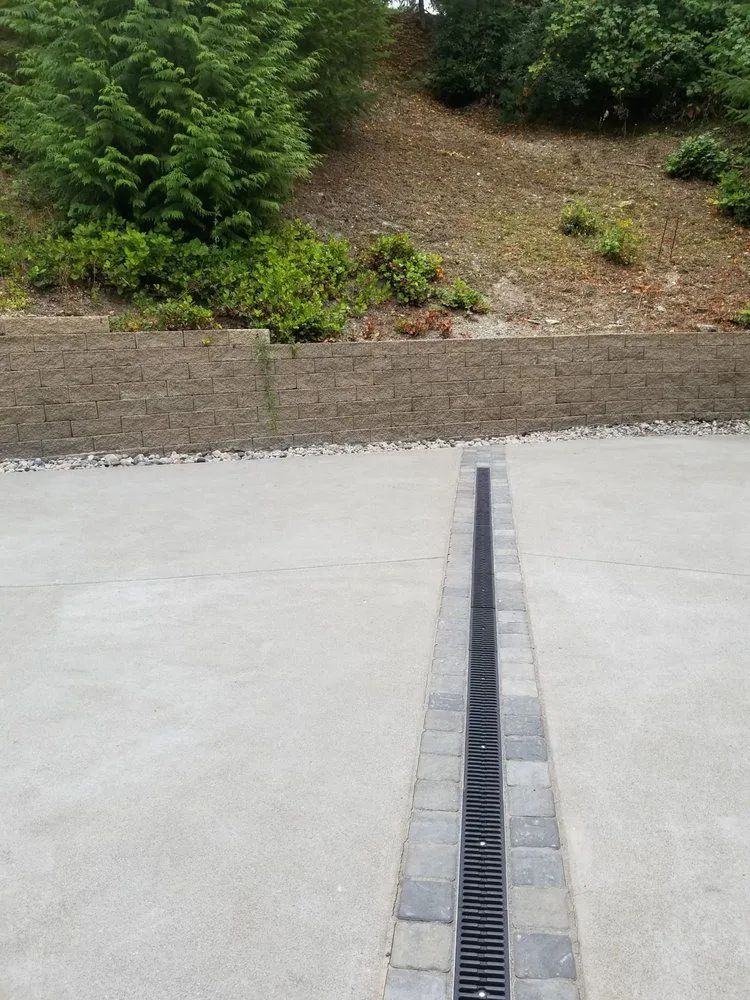
A Channel Or Trench Drain At The Low Edge Handles Water The Slope Alone Can't
A channel or trench drain can help when the patio layout makes proper slope difficult. Installed along the low edge, it captures runoff and directs it away through underground drainage. This approach can complement regrading, especially where surrounding structures limit how much the slab can be pitched.
More retaining walls fail from water than from the soil load they were actually designed to hold.
Trapped water turns into pressure the wall was never sized for. When rain soaks into the backfill and has nowhere to go, it builds up as hydrostatic pressure directly behind the wall face, on top of the lateral earth pressure the wall is already resisting. That combined force is strong enough to bulge, crack, or push over a wall that would otherwise have held for decades. The wall usually isn't undersized. It's drowning.
Drainage has to move water out faster than the slope delivers it. A properly built wall includes a layer of clean, compactable gravel behind it, wrapped in fabric to keep fine clay particles from clogging it, with a perforated drain pipe running along the base to carry water to a safe outlet away from the wall and the foundation below it. Weep holes or drain outlets built into the wall face give that water somewhere to go instead of building up behind the concrete or block.
Water Is the Wall's Real Opponent
Tip: Watch where water actually goes during and right after a storm, not just whether the yard looks dry a day later. A spot that stays soggy for days, or a downspout that dumps directly onto the slope above a retaining wall, is exactly the kind of concentrated water load that overwhelms drainage built for general rainfall. Point that runoff somewhere else and the wall's drainage system has a much easier job.
Frequently Asked Questions
How much slope does a concrete patio actually need to drain properly?
A quarter inch of drop per foot is the standard benchmark, roughly a two percent grade. A ten-foot patio built to that pitch drops about two and a half inches from the house to the far edge.
Can a flat patio be fixed without tearing it out completely?
It depends on how much of the slab is affected. A small, isolated low spot can often be corrected with a sloped overlay. A patio pitched poorly across most of it usually needs removal and repour.
Why did my patio start holding water years after it was installed, even though it drained fine when it was new?
The most common reason is uneven settling of the base beneath the concrete, which can continue for years and create a new low spot. A rerouted downspout or new landscaping nearby can also redirect water unexpectedly.
Does standing water on a patio actually damage the concrete, or is it just an inconvenience?
It's more than cosmetic. Standing water works into hairline cracks and pores, then migrates down to the compacted base. Over repeated wet seasons, that moisture washes out material, creating voids that let the slab settle further.
Is a slick, algae-covered patch on my patio related to the drainage issue?
Almost always. Algae and moss need consistent moisture, and a shaded low spot that stays wet for days after rain is that environment. Correcting slope so water clears within minutes removes moisture algae depends on.
Can a patio drain design account for a covered or enclosed section added later?
Yes, but it has to be planned. A roof or enclosure concentrates rainwater below it, and if the grade wasn't built for that flow, ponding shows up at the roofline. Regrading or adding a drain resolves it.
A Patio Built to Shed Water for Good
A patio that pools water isn't waiting for a dry summer to fix itself. It's telling you, every time it rains, exactly where the slope was never built correctly or where the ground underneath it has shifted since the day it was poured. Reading that signal early, before another wet season pushes more water into the base and settles the slab further, is what keeps a shallow puddle from turning into a full slab replacement instead of a straightforward regrade.
Aloha Concrete and Design
has spent more than 20
years grading concrete for wet East Bay winters, working from Concord, CA to Walnut Creek and the hills above Lafayette. Owner June and his crew trace standing water back to its real cause, whether that's a slab poured without enough pitch, a subgrade that settled unevenly, or a downspout draining onto ground it was never meant to reach. That kind of experience turns a patio from a recurring headache into a surface built to shed water properly.